Your Leads Go Cold Before the Sales Call Starts
Most sales aren't lost on the call. They're lost in the hours between the opt-in and the call, when nobody answers and the buyer's certainty fades.
By Aaron Ball
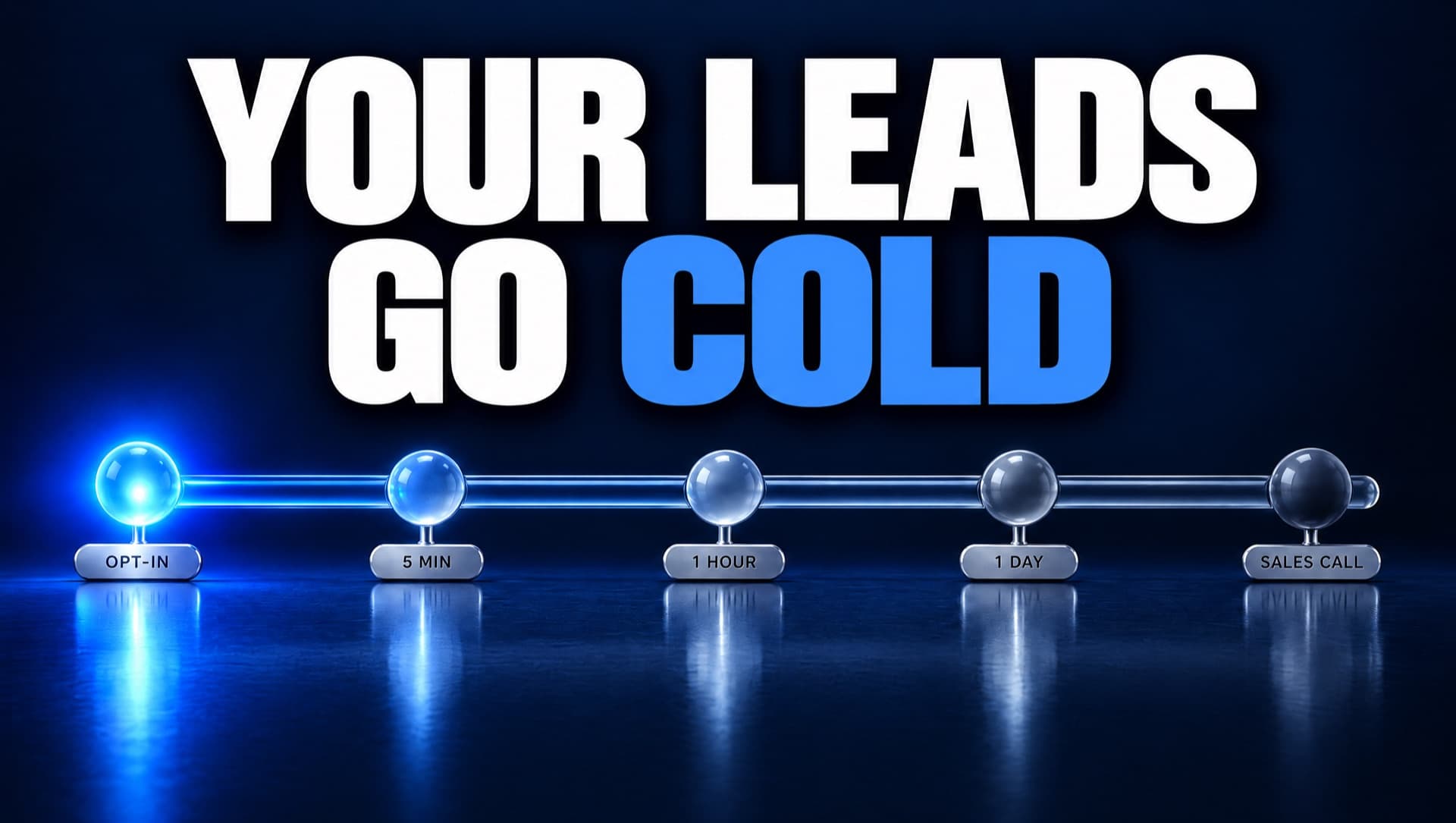
Most owners think sales are won or lost on the call. So they train the closer, rewrite the script and listen back to recordings.
The reality is that by the time the call starts, most of the sale has already been decided. Not by the closer. By everything that happened, or didn't, between the moment someone raised their hand and the moment they sat down.
The quiet math between opt-in and call
Run the numbers on a business that looks healthy. 100 people opt in and ask to talk. Half of them book a call. Half of those show up.
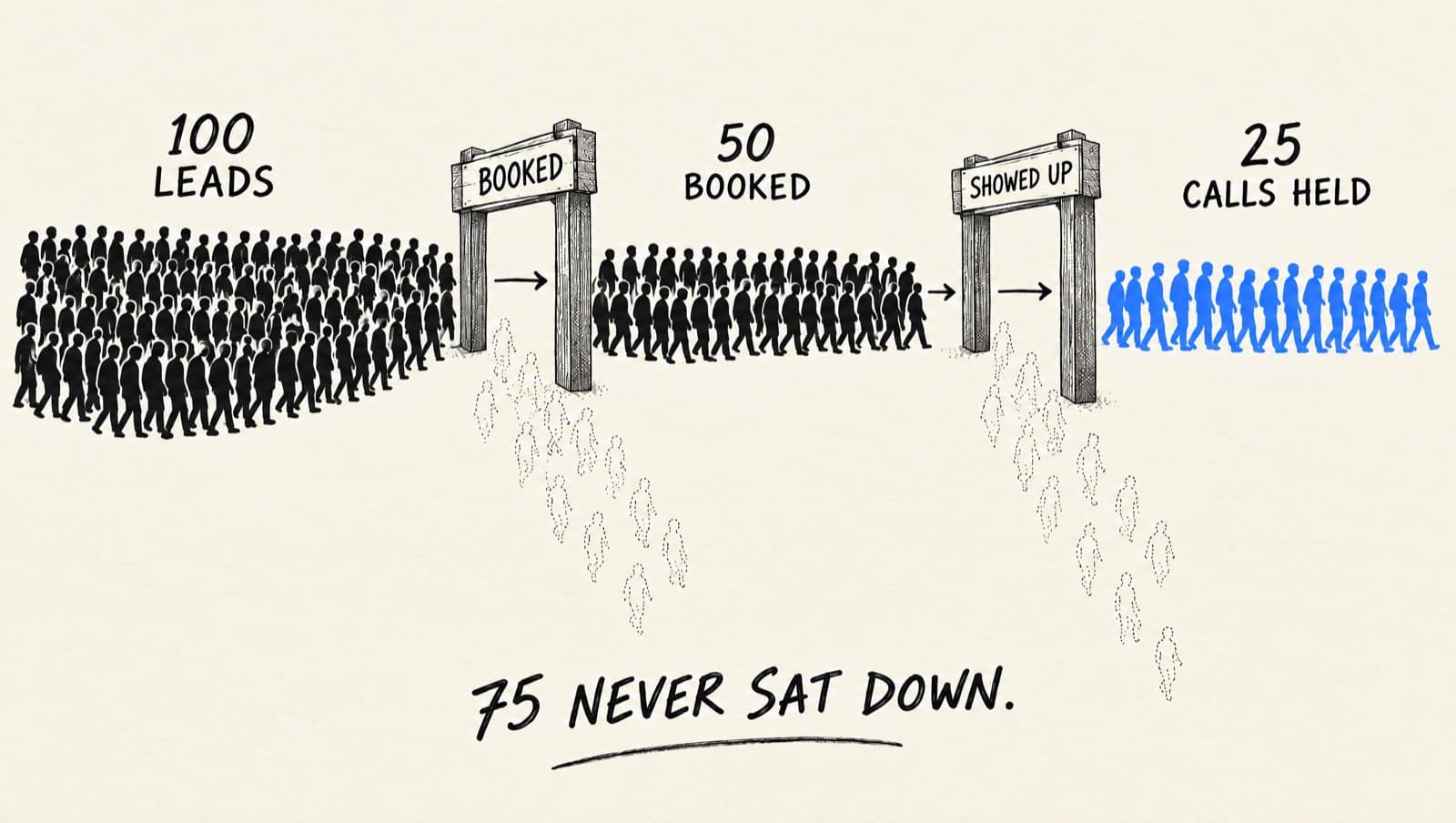
That's 25 conversations out of 100 people who asked for one. Seventy-five never sat down. Your closer never had a chance with them, and no script would have changed it.
This is the stretch of a business where I see the most money disappear without anyone noticing, because nobody owns it. Marketing's job ended when the lead came in. Sales' job starts when the call does. The hours in between belong to no one.
Three numbers tell you what it's costing you:
- Booking rate. Of the people who raise their hand, how many book.
- Show rate. Of the people who book, how many show up.
- Held calls. What's left, and the only number your closer can actually work with.
Why leads go cold: certainty fades
Here's the buyer psychology underneath it. People don't buy the best option. They buy the one that feels like the safest decision. I call this Proximity to Certainty: the business that moves a buyer from uncertainty to certainty fastest usually wins, even against a better offer.
The moment someone opts in is the moment their certainty is highest. They've decided you might be the answer. Every hour of silence after that, the doubt comes back. They remember the last program that didn't work. They see a competitor's ad. They talk it over at dinner. By tomorrow, the person who was ready to talk to you is "just looking."
Speed matters more here than almost anywhere else in the business. Published research on sales response times keeps finding the same pattern: reach someone within the first few minutes and they're many times more likely to become a real conversation than if you reach them an hour later. After a day, most of them are gone.
What a business that doesn't leak looks like
Fixing this isn't about one tool. It's about designing the first hour, and then every day until the call, on purpose. Four things matter, in this order:
- Be available. If the next open slot on your calendar is nine days out, you've already lost a share of the people who wanted to talk this week. Offer more times, sooner, including the evenings and weekends when your buyers are actually free.
- Be fast. Reach out within minutes, not hours. Not a generic autoresponder. A real follow-up that responds to what they told you.
- Be personal. The follow-ups and reminders should sound like they're from someone who read the application. Certainty is built by being specific.
- Be persistent. One attempt isn't follow-up. Keep reaching out by text, email and phone until you get an answer.
And give people every way in. Some leads want you to call them. Some want to call you. Some want to pick a time themselves at 10pm on a Sunday.
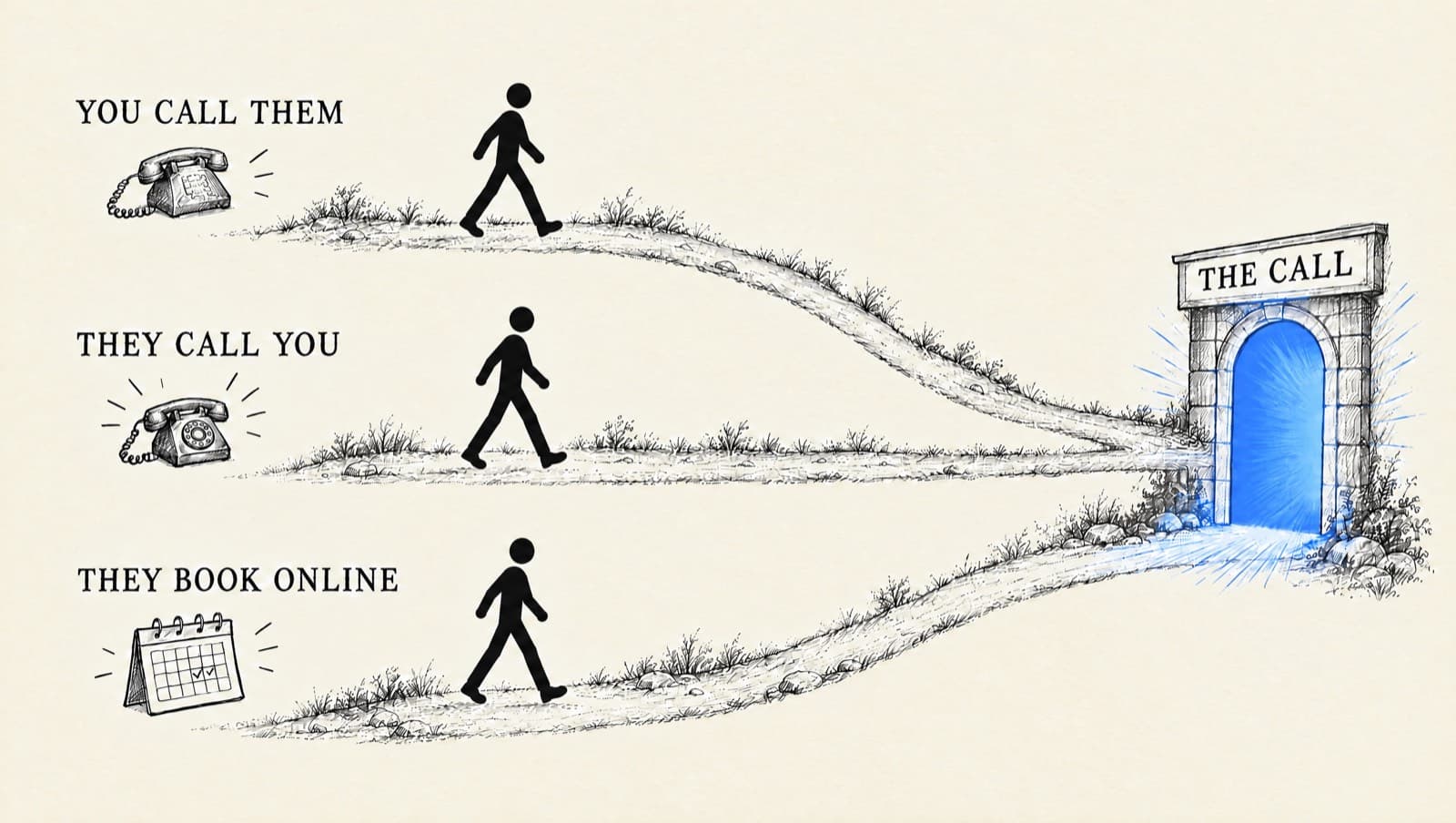
Every path a lead can't use is a lead you've handed to a competitor.
Then protect the booking
A booked call is not a held call. The gap between booking and showing up is where deals quietly die, and the fix follows the same principle: keep certainty high until the call.
Send a confirmation that reminds them why they booked. Send a reminder the day before and the hour before. Add a quick personal touch if they haven't confirmed. And if they miss it, reach out right away with a warm, one-step way to rebook, not silence.
This is what Operator Mode was built to run
Designing this once is a project. Running it every day, for every lead, at 9pm on a Saturday, takes a system. That's what Operator Mode is for.
Plug your business in, and one machine handles your operations, acquires new customers and brings in new revenue, run by an Operator agent that knows your business. More than 25 jobs, handled by one very powerful machine dedicated to helping you strategically grow, scale and operate your online business.
For the stretch between opt-in and call, that means:
- Instant follow-up. Email and text automations start the moment someone opts in.
- AI voice assistants. They answer your line, book appointments and call new leads back.
- A booking calendar and applications. They qualify people before anyone takes a slot on your calendar.
- Automatic lead scoring. Your Relationship Command Center puts the hottest leads in front of you first.
- Show and no-show tracking. Your booking rate, show rate and held calls are visible without building a spreadsheet.
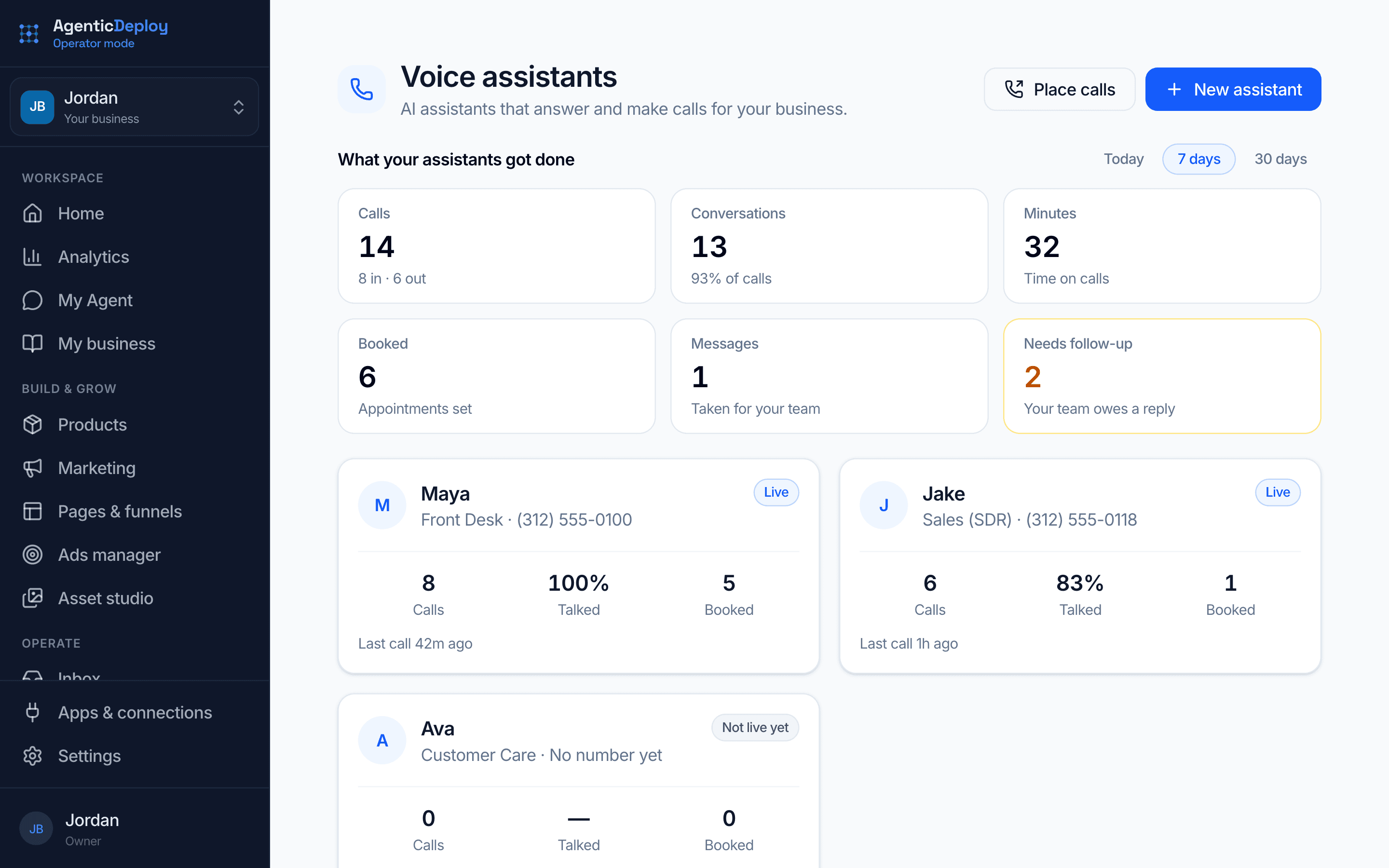
Your Operator agent builds the sequences, the booking pages and the voice assistants with you, and you approve what goes live. Then the system works every lead, every hour of every day, including the hours you're asleep.
"We already have a CRM and a calendar we like"
Keep them. Operator Mode connects to the tools you already use and sends every new lead into your CRM with their tags, their answers and how they found you, so your team keeps working where it already works. It reads bookings and show-ups back, so the numbers stay in one place.
If your leads are going cold
Operator Mode is invite-only, and we bring on a small number of businesses at a time.
The application takes about two minutes. Tell us how many leads you get and how many calls you actually hold. If you're not sure, that's the first thing we'll find together on the call.
P.S. A quick test before you apply: opt in to your own funnel tonight at 9pm and time how long it takes for a real follow-up to reach you. That number is your first constraint.